I was honored with receiving this award in 2017 and thrilled that Teri Weber is a finalist for this year! Today, on Wonder Woman Wednesday, we wanted to honor her and share the article she was in at BenefitsPro!
When Teri Weber started working from home full time, she found it a bit of an adjustment. It was almost like being absent from work. Which just happens to be one of her specialties. Weber is a partner with Boston-based Spring Consulting Group, LLC, an Alera Group Company. When COVID-19 began to confine millions of workers to their homes, she was swamped by client calls regarding work absences.
“‘Will quarantine be a disability?’ ‘People all want to take their sick time now; how do we do that?’ ‘What if 50 percent of our workforce cashes in on what they’ve banked? Could people do a time donation?’ ‘What do I do for employees who work from home but need to care for kids?’ It’s always a balancing act of finance and policy. It gets into the weeds quickly,” Weber says.
But it turns out that is where Weber spends a lot of her time: in the weeds with clients, showing them the way out.
Weber became a partner with Spring Consulting in 2008, where she has focused on disciplines such as absence management that can save clients time, money, and management headaches. Absence policies can be shockingly ad hoc, inconsistent, and are often crafted in the breach, rather than the legal or human resources departments. During the COVID-19 outbreak, Weber has had to explain to clients that actions they take to attempt to manage a tidal wave of absence incidents could easily become company policy.
To one client with a question about virus-related time off, she said: “What do you want to accomplish with this? What are you hoping to do? It’s about getting to the root of why you think this policy will help you now. Because the policy can become law long after the crisis is over.” She also lends her absence expertise to the Disability Management Employer Coalition, a group of New England employers and insurance companies focused on disability and leave of absence policies.
“We speak a different language than most people,” she says. “An employee will say, ‘I need time off for something.’ That’s how they think about it. Our work is around compliance, cost and culture. We look for the best programs we can design, from leave time to return to work.”
Another area of focus is student debt and student loan payments as a benefit.
In the quest to land top young graduates, companies experiment with offering student debt payments. Weber likes to include the benefit in a plan design, but only if she believes it is being offered for the right reasons.
“It is often a targeted approach to address turnover among younger people, or to attract young talent. Other employers just want to give it as a benefit without a specific objective.” Weber asks, is the target of the benefit specific or general? Short term or long term?
“That $2,000 can make a huge difference to a young person. But does it serve your overall strategy?” she says.
One could get the impression that Spring deals largely with major employers, those who have the financial clout, employee numbers, and staffing to engage in creative plan design. But that’s not the case.
One of Spring’s most devoted clients is edHEALTH, a three-person health insurance captive based in Rhode Island. edHEALTH is a member-owned consortium that serves as the stop-loss provider for group members, mostly East Coast colleges, universities, and charter schools, including Boston College, Sarah Lawrence, Brandeis, Wellesley and Emerson.
Tracy Hassett, president and CEO of the captive, says Weber served as an early advisor to the original 24 members as they developed their model.
“When we started talking, we were faced with numerous barriers,” Hassett says. “Brokers and consultants at the schools were nervous about taking that business away from them.
Meanwhile, the schools we talked to made it clear they didn’t want to change their plan design. They wanted to be part of the consortium and save money. ‘But we don’t want to make any changes to plan design or to our carriers or upset faculty or staff.’”
Hasset feared it would take long hours over many meetings to arrive at a plan design that would satisfy all the members. Enter Weber. Working with Hassett, she helped the members reach agreement quickly on a common plan design.
“Teri is easy to talk to, offers very clear descriptions, and she made sure potential members at the time knew that we were trying to deliver a program to minimize costs and maximize coverage. That is still the role she plays and she does a wonderful job.”
In the years since, the group has grown, while costs have held steady. Average premium growth per member over the last six years had been 3.5 percent, while admiration for Spring and Weber grows every year.
“Spring has been an incredible partner since before our inception, and an incredible partner in helping us grow,” Hassett says.
Meanwhile, back in her “home” office, Weber is getting new insights into the challenges her plan members face when forced to juggle work and child are duties. Her two daughters, 12 and 14, don’t need a lot of supervision with the family cooped up in the house, but like kids all over, they have been attempting to master online learning while Mom and Dad grow accustomed to virtual meetings, the intricacies of telecommuting, and keeping dispersed teams motivated during a global pandemic.
But Weber manages to keep a positive attitude as she attempts to establish “a new normalcy at home.”
“I’m an optimist. I look for the good people out there. The sun is always shining, even when there are clouds are in the way!”
Most people are working from home these days due to the Covid-19 Pandemic. In order to make work more efficient it’s important to follow these steps in order to be most productive.
1. Follow your standard routine.
2. Set up a special workspace.
3. Use video calls to keep in touch.
4. Use task management to keep track of progress.
5. Do not stay in the same position for too long.
6. Make sure to exercise everyday.
7. Find what helps you concentrate.
8. Look after your mental health.
The NBA suspended its season while the NCAA announced March Madness would be played in empty arenas (talk about surreal).
And, what may have been at the top of the surreal scale on any other day, a former vice-presidential candidate (Sarah Palin) sang “Baby Got Back” on “The Masked Singer.”
Of course, that surreal 24 hours has grown into an exponentially more surreal week with no end to the escalation in sight.
The questions are endless, personally and professionally. In that post, I offered some suggestions to maintain SOME level of personal grounding. I suggested we all . . .
Sit in 10 minutes of meditation
Go for a walk
Read something for pure enjoyment
Call a friend and have a nostalgic conversation (i.e., nothing about current events)
Just do something to restore a sense of sanity and control to your day
I encouraged us to all – Be safe. Be smart. Be balanced.
I feel these suggestions are still solid but, given the events of the 72 hours or so that have transpired since then, they only begin to touch on the significance of what we are experiencing. This is a much more significant health crisis than we knew even that short time ago. It seems clear we still don’t just how significant it will prove to be.
It cannot be denied; we are all being impacted personally.
But, what about professionally?
At the risk of seeming impersonal and insensitive, what about our businesses? What adjustments do we need to be making?
We see many government-imposed changes. Restaurants and bars are being closed or put on restricted operations. Schools are being closed or moved online. Gatherings of more than 10 (as of this writing – it was 50 when I started) are being canceled or postponed.
Beyond the government-imposed restrictions, many businesses that rely on “social proximity” (I know, not necessarily the right use of this phrase, but I mean the opposite of social distancing) have chosen to close on their own.
I understand the need to protect health and life at all costs, but that doesn’t stop me from worrying about the long-term business implications of these decisions. How many businesses will fail? How many employees of closed businesses will never recover financially? Again, these aren’t life and death questions (in most cases), but they’re still very real.
A business “gray” area?
And, what about businesses that are either already virtual and remote in their operations or are capable of performing at least some activities without threat to others? By maintaining some “new normal” level of business operations, do they run the risk of appearing insensitive? Or, is it maybe their responsibility to continue operations?
Before I share my thoughts, you should know that our entire business operation runs virtually and remotely. Each of our team members works individually in their own office space. We are among the “socially-distanced elite” in that regard. While this arrangement does present limitations, it has prepared us for where we are today. Over the next few days/weeks, we’ll be sharing some tips that have helped us build a successful business this rather unusual way.
Here’s my perspective and opinion.
If a behavior puts anybody else at risk, it needs to be changed. The physical health of everyone has to be our number one priority.
I believe our mental health has to be a very close second to our physical health. For me, that means maintaining daily activities that are as close to normal as possible. Sure, we may have to work from home instead of going into the office but, if that’s possible, I feel it is way healthier than not working at all.
Finally, we will come out of this and, when we do, we need businesses to be as strong as possible. That can’t be the case if we bring everything to a complete halt.
So, what will I be doing personally?
I will be aware of my physical movements and the effects they have on others.
I will be respectful of the decision others may make to more drastically curtail their business operations.
I will continue to work/live as much of an uninterrupted daily life as is responsibly possible.
I will be understanding of those who have a different opinion than mine.
Our role is to help our clients build stronger businesses, and we’re finding there are a lot of needs right now to that end. We’re helping our agencies make decisions and take actions in the best interests of their own businesses and the lives of their clients. So, our work isn’t slowing down.
We hope you aren’t offended when you see us active on LinkedIn.
We hope you aren’t shocked when you see our blog posts pop up in your inbox on Mondays and Thursdays.
We hope you don’t mind when we respond to your inquiry.
We hope you understand the spirit in which we will be working for the foreseeable future.
We hope you know how much we are thinking about you during this unprecedented time.
Above all else, we hope for your health, safety, and balance.
Looking for an easy digestible explanation what considerations to make for Mid-Year Enrollments under a Section 125 plan? Check out this great video from colleague, Chelsea Whalley of J Donovan Financial.
Special Mid-Year Enrollment Window
1. Get Approval from Health Insurer in writing. If Self-funded, approval comes from stop-loss carrier.
2. Decide if these special deductions will be pre-tax or post-tax. As of right now, the IRS has issued no guidance for pre-tax elections due to COVID-19.
Section 125 Mid Year Election Change Events:
1. Change in employment status if the change impacts eligibility for health plan
2. A significant change in health plan coverage
3. HIPAA Special Enrollment (marriage, birth, etc)
To avoid any unintended liability, employers should check with your CPA and/or attorney to decide what is best for your business.
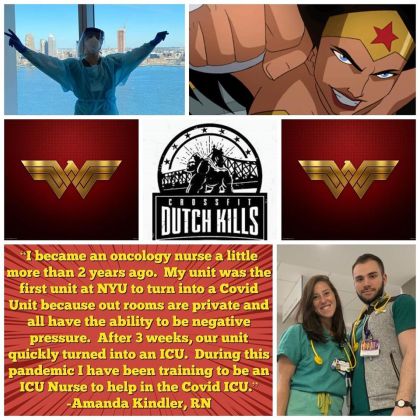
This week’s #WonderWomanWednesday is someone near and dear to us in NYC. Amanda Kindler was a Registered Nurse working in Oncology prior to the Covid-19 Pandemic and was part of the first Covid Unit in the NYU Hospital System. When Amanda has some downtime, which is rare, she’s sure to log in her CrossFit workout from the CrossFit Dutch Kills box in Queens, NY where she has been a member for about 2 years. We salute Amanda and all the other healthcare providers putting themselves at risk during this time to help the people of our city!
For this edition of #FeatureFriday check out our guest blog by The Jacobs Group, the leading provider of talent to the insurance industry. We greatly appreciate their keen insight to the subject matter and contributing to our blog this week, this content applies to anyone that is managing employees remotely during this time and beyond.
As the insurance industry adapts to a workforce that is primarily – if not completely – remote, many managers are finding themselves overseeing work-at-home employees for the first time. At Jacobson, many of our corporate employees and temporary staff work remotely on a regular basis. We asked a few leaders across our organization for their key insights and advice on effectively managing remote staff.
Prioritize communication.
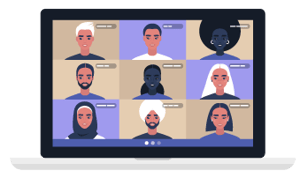
Dave Coons, Senior Vice President: Stay engaged! Host regularly scheduled one-on-one meetings and team meetings over Skype and Zoom. Video is great because it creates a more personal connection and gives you the ability to read people’s non-verbal cues.
Salil Shenoy, Controller: My open-door policy remains the same whether we’re in the office or working remotely. Making time to be actively engaged and available is crucial. This entails scheduled and ad-hoc one-on-one and team meetings with clear agendas to ensure the time is focused and productive. Communication and trust are key! This is even more true when individuals on your team are dependent on other employees they no longer see in person. Open and honest communication helps create a collaborative and positive environment that is proactive and preventative, rather than reactive and corrective.
Set clear expectations.
Nikki St.Martin, Vice President, Marketing Communications: It is more important than ever to ensure everyone is on the same page regarding everything from work hours to deadlines and production levels. Schedule a weekly call with your team to share the department’s priorities for the week and address workflows and any challenges. Continue to provide regular feedback, both positive and constructive, so employees know if they are performing at the expected levels.
Karen Aiello, Assistant Vice President, Account Management: I’ve been doing this for almost 20 years, and it’s important to stay in constant communication. Make sure there is a good understanding of priorities, expectations and performance/quality goals.
Alison Wetmore, Assistant Marketing Manager: Coach your team for your communication style. Be sure to spell out the level of communication you expect. For example, if you want individuals to confirm they have received emails about new projects, be sure to let them know.
Focus on trust.
Kylee Lacson, Assistant Vice President, Life: It’s important to trust your employees and let them do their jobs. Micromanaging will have a negative impact on productivity. If you are seeing a dip in work product or quality, approach them from the angle of “How can I help?” versus “Why didn’t you do X?”
Tanya Rinsky, Senior Account Manager, Health: Come from a place of support, always assume positive intent and respond quickly, even if it’s just to say you’ll get back to them when you know more. When communicating by phone and body language can’t be used as a guide, it’s important to ask lots of probing questions to ensure you fully understand what the person is trying to communicate.
Recognize different work styles.
Abbe Sodikoff, Senior Vice President: For people who prefer to work alone, it can be challenging to get them engaged with the group as a whole. Finding ways for those individuals to lead a discussion or participate and contribute without feeling put on the spot can be challenging. However, taking extra time to meet those people at their comfort level is well worth it.
Judy Busby, Senior Vice President, Executive Search and Corporate Strategy: Each employee has different needs. You must adapt to each employee to maximize team contributions, company culture and professional development.
Set boundaries.
Kylee: Set boundaries around availability to help people unplug for the day. If an email isn’t urgent at 9 p.m., then use the “delay send” feature so your employees can feel comfortable setting boundaries with their time. People who are new to working at home tend to be challenged with turning off work. Small adjustments can help with that.
Leverage technology.
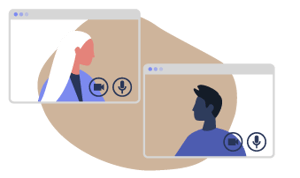
Beth Roekle, Senior Vice President, Talent Delivery: Leverage technology wherever you can. For instance, we use group chats, video conferencing and emails to help keep people connected. In addition, we prioritize our regularly scheduled communication as much as possible to ensure adequate opportunities to connect.
Alison: As our team has grown, we’ve needed to find ways to best manage multiple people working on different aspects of a project. Technology such as Basecamp and Trello can help track where projects stand at any given time, as well as who is responsible for each part of a project.
Connect on a personal level.
Dave: I believe that you don’t manage “people,” you manage “personalities.” What I mean by this is not all people are the same, and they have different needs when it comes to being supported and managed. It’s important to realize this and tailor the way you manage your employees using different means and techniques to get the best return on your investment.
Nikki: Small talk happens naturally in the office, in the lunchroom, passing in the hallway. When everyone is working remotely, maintaining a connection takes intentionality. Many of your employees are juggling more than they are used to in the game of life. Take a few moments at least once per week to just call (or even better, Facetime or Skype video) and see how they are really coping. Use group messaging software to say good morning, share a funny story in the afternoon or ask about employees’ plans for the weekend.
Judy: You need to make room for personal interactions, especially since people are now at home with their kids, cats and other distractions. This requires a relaxing of norms for all to feel comfortable videoconferencing. I’m learning so much about team members’ families, interests, pets and more and think it will bond us for many years to come. There’s typically so little time in the workplace to talk about these things, but it’s now integrated into everyone’s work day. As a high-performance leader, this is a great time to grab insight about someone to better lead them.
Catherine Prete, Senior Vice President, Operations: It can be easy to slip into “all business” mode when you don’t see the person. Be intentional about connecting differently in communications that don’t involve seeing your staff. For instance, start calls by asking about personal matters and express appreciation. Now that all of my staff is remote, I have learned that not only can we easily survive in this environment, we can thrive. Everyone has been diligent to keep the human connections in lots of unique ways.
About The Jacobs Group: The Jacobson Group is the leading provider of talent to the insurance industry. They offer executive search, recruiting and temporary staffing services at all levels across all industry verticals.
We know New Yorkers are resilient and are ready to push up their sleeves and help their community during times of struggle, however we are in uncharged waters. If you are looking for ways to help out during this time, the Capalino+Company team has published an excellent list to show creative ways you can help during this time! Stay Safe!
Here are ways for New Yorkers can help during this crisis:
Share the mission of Invisible Hands to provide safe, free food deliveries for NYC’s most at-risk communities facing COVID-19
Sign up for alerts from New York Cares to learn more about what city agencies and community partners are doing to help those most impacted by COVID-19
Donate to the WHYHunger Rapid Response Fund to protect food access for all people by bolstering WHY’s work with emergency food providers, small-scale farmers, and food chain workers
Secure masks, gloves, and hand sanitizer for police officers on patrol across the city through the New York City Police Foundation
Broaden your reach by contributing to The New York Community Trust NYC COVID-19 Response & Impact Fund to aid nonprofit service providers struggling with the health and economic effects of the coronavirus; the fund will give grants and loans to NYC-based nonprofits that are trying to meet the new and urgent needs that are hitting the city
Help the Robin Hood Foundation raise funds to put together a food program for their network of nonprofits to continue to serve low-income communities
Hello from the Covid-19 epicenter, aka NYC. I don’t know about you all, but the past few weeks have been crazy, exhausting and just plain sad at times. It is definitely not business as usual here and I know that’s true in many other places as well, but I also know we will all make it through this time. One of the things that has kept me going during quarantine is connecting with the incredible women from our industry who are still able to share some great ideas with me about what they are most proud of in the last 12 months. Be on the lookout for another article coming soon that will include many of the featured women in this series who will share what they have been doing to stay connected with their clients during all of this.
This month, I’m going to introduce you to two new friends who have been a great source of information and support for me during this time. I know I have said it before, but it is so important to develop these peer-to-peer mentorship relationships, because when there are rough times like these, we pull each other up and help each other to excel. Please join me in welcoming Chelsea and Jennifer to the fold.
“In the past 12 months, my biggest accomplishment has been learning that my business is not actually about me.
When I owned my first agency, I was infatuated with the idea of developing other agents. While this sounds admirable, I was truly motivated by the energy rush I received seeing others succeed. Even though I was helping others, at the core of it all, it was still about me.
Even in my second agency, there have been times when I put together the best options for a prospect to save them money and time; yet, I still don’t win. When this would happen, I would make it about me (my presentation skills, my sales skills, etc). Perhaps it was, but there’s a good chance that it was about one of the million other factors that business owners consider when making decisions.
The truth, and my biggest lesson, is that nothing is about me. I have learned that the only way to truly scale my business and help as many employees and clients as possible is to let go of the belief that the outcome is directly tied to my worth as an advisor or as a person. With this, I can finally be present and enjoy the work I am doing.”
“I’ve been in financial services many years and I’ve never been more excited to do what I do. My passion lies in supporting women and giving back. In my role, training and developing agents to build their business, I’m able to do both. I’ve seen great success among the women leaders who count for almost half of my business. In the last year, I’m pleased to have been highest-producing field leader at my company, hitting record sales. And helping my agents learn and grow gives their clients peace of mind.
One of the best aspects of our industry is the relationships among the women within it. I am fortunate to be supported and inspired by many great women. In 2019, I was named WIFS Woman of the Year, a wonderful honor. Celebrating success within our field is an important way to create community and inspire the next generation.”
I know that I, as well as the crew here at BenefitsPRO are thinking of everyone during these uncertain times. As always, if you know of great women in the field who are working hard to make this this industry even better, send an email introduction to me at scombs@combsandco.com. I’d love to connect! Stay safe my friends.
Click Here to see the original article in Employee Benefit Advisor
The Coronavirus Aid, Relief, and Economic Security (CARES) Act was signed by President Trump on March 27 after passing both the House and Senate earlier in the week. This $2.2 trillion stimulus package is wide-reaching and intended to provide economic relief for the individuals and businesses hit hardest by the coronavirus pandemic and the resulting financial downturn.
Within the 800-page bill, there are several important provisions affecting employers, including requirements for coverage of COVID-19 testing and treatments. There are also provisions that extend beyond the coronavirus into other areas of employer benefit designs with potential impact to group health plans beyond the current public health emergency.
1. Coverage of COVID-19 Testing and Treatment
Group health plans must cover COVID-19 screening and the related office visit without cost sharing, which includes COVID-19 tests that may not have been approved by the US Food and Drug Administration. Group health plans must cover, without cost-sharing, “qualifying coronavirus preventive services,” which are items, services and immunizations intended to prevent or mitigate COVID-19 that receive a rating of “A” or “B” from the US Preventive Services Task Force (USPSTF) or a recommendation from the CDC Advisory Committee on Immunization Practices (ACIP) with respect to the individual involved. This requirement will apply 15 business days after the recommendation is made by the USPSTF or ACIP.
2. Payment for COVID-19 Testing and Treatment
Group health plans providing COVID-19 testing must reimburse the provider in the amount of the negotiated rate, if in effect before the public health emergency began, or if not, an amount that equals the cash price as listed by the provider on a public internet website, or a negotiated rate with the provider for less than the cash price. This provision is effective upon enactment of the CARES Act (March 27, 2020) and is not retroactive.
3. Telehealth
The Act allows a high-deductible health plan with a health savings account (HSA) to cover telehealth services prior to a patient reaching the deductible, without regard to whether the services provided via telehealth relate to COVID-19. This provision is effective upon enactment and lasts through plan years beginning in 2021.
4. Over-the-counter Medical Products without a Prescription
The Act allows for account-based plans, including HSAs, flexible spending accounts and health reimbursement arrangements, to reimburse members for the purchase of over-the-counter medical products without a prescription from a physician, regardless whether the product is related to treatment of COVID-19. This reverses a restriction imposed by the Affordable Care Act. These changes are effective for amounts paid/expenses incurred after 2019 and seem to apply indefinitely.
5. Expansion of DOL Authority to Postpone Certain Deadlines
The Act amends ERISA to provide DOL the ability to postpone certain ERISA filing deadlines and provide other relief for a period of up to one year in the case of a public health emergency.
A few things were also noticeably left out of the CARES Act, including two issues many employer groups have been monitoring closely. First, besides the HSA over-the-counter provision described above, there is nothing in this legislation to address prescription drug pricing. No portions of HR 3 or any other existing drug pricing legislation were included in the CARES Act. Second, there is nothing in the package to address the larger issue of surprise billing. Like the drug pricing issue, no language from existing legislation addressing surprise billing was included in the CARES Act.
The good news is that the Act seems to have bought more time on these issues since the healthcare “extender” deadline set to expire May 22 has been changed to November via this bill. The bad news is that means drug pricing and/or surprise billing legislation will need to be addressed in a lame duck session of Congress where it’s difficult, though not impossible, to pass major bipartisan legislation.
Employer groups will continue monitoring these issues as we work through coronavirus-related legislation implementation, and seek opportunities to be included in discussions, on both COVID-19 and other health policy issues, to ensure employer perspectives continue to be heard.
 To one client with a question about virus-related time off, she said: “What do you want to accomplish with this? What are you hoping to do? It’s about getting to the root of why you think this policy will help you now. Because the policy can become law long after the crisis is over.” She also lends her absence expertise to the Disability Management Employer Coalition, a group of New England employers and insurance companies focused on disability and leave of absence policies.

 Dave Coons, Senior Vice President: Stay engaged! Host regularly scheduled one-on-one meetings and team meetings over Skype and Zoom. Video is great because it creates a more personal connection and gives you the ability to read people’s non-verbal cues.
 Set clear expectations.
 Recognize different work styles.
 Beth Roekle, Senior Vice President, Talent Delivery: Leverage technology wherever you can. For instance, we use group chats, video conferencing and emails to help keep people connected. In addition, we prioritize our regularly scheduled communication as much as possible to ensure adequate opportunities to connect.
 Judy: You need to make room for personal interactions, especially since people are now at home with their kids, cats and other distractions. This requires a relaxing of norms for all to feel comfortable videoconferencing. I’m learning so much about team members’ families, interests, pets and more and think it will bond us for many years to come. There’s typically so little time in the workplace to talk about these things, but it’s now integrated into everyone’s work day. As a high-performance leader, this is a great time to grab insight about someone to better lead them.


 combsandco